

A lean workflow for compact username design content across formats: ev…
페이지 정보
작성자 Hassan Cowan 조회13회 댓글0건관련링크
본문
By late afternoon, a solo marketer may have five captions and three visual concepts that sound polished but contradict one another. A solo creator producing a short series about compact online identities faces that risk while trying to help viewers compare brevity with readability and meaning. The raw material includes letter shapes, spoken form, accidental meanings, platform rules, and alternative lengths, and those details cannot be improvised safely. The remedy is a shared source of truth. Using evidence-led review as the organizing approach, the team can separate platform facts from illustrative creative choices and still produce at a practical pace. The workflow below treats generated material as editable working copy, not finished campaign evidence.
Start with the task behind the search. Someone using discord 4 letter username generator is probably facing a blank field, a crowded member list, or a confusing community structure and wants a workable direction quickly. Set this campaign objective: help viewers compare brevity with readability and meaning. That turns search intent into an editorial choice. Record the exact query once in the background note, then use natural terms such as handle, community identity, room label, or navigation plan. State whether candidates are illustrative and never suggest that availability has been confirmed.
Write the campaign brief in operational fields. Identify the intended producer and audience; in this case, the producer is a solo creator producing a short series about compact online identities. Record the decision the audience faces, the single action the content should support, and the proof needed for any platform claim. Add letter shapes, spoken form, accidental meanings, platform rules, and alternative lengths to a source table with an owner and check date. Give the editor a boundary as well as a target. Define voice with examples: calm, practical, lightly playful if appropriate, and willing to state uncertainty. Finish with formats, dimensions, duration, deadline, review owner, and approval conditions.
Generated material reduces blank-page time, but it creates specific review work. A model may invent a platform rule, imply that a name is available, repeat familiar hooks, or drift away from the requested brand voice. Images can contain broken words, misleading interface elements, impossible hands, duplicated objects, and inconsistent letterforms. Clips can change characters, colors, room labels, and object positions between shots. Variety does not guarantee a distinct idea. Keep research, policy interpretation, final typography, factual approval, and publishing decisions with a person.
Treat copy generation as controlled expansion and compression. Begin with a 200-word core explanation based on the approved brief. Ask for three openings aimed at different audience moments, then compress the selected version into a caption and voiceover. Do not ask the system to invent availability or policy facts. An illustrative screen that rejects 'I1O0' for visual ambiguity provides a concrete teaching device, not user data. Keep the same candidate or layout through every derivative so the campaign tells one coherent story.
Keep campaign inputs editable rather than baking them into every prompt. Store the audience, objective, example, tone, facts, and exclusions as separate fields. Structured inputs make review more precise. Freeze them only at approval.
Convert the selected message into a visual job before writing an image prompt. Decide whether the asset must compare names, sequence a member path, demonstrate a layout, or summarize checks. Use an illustrative screen that rejects 'I1O0' for visual ambiguity as the shared illustrative scene. Specify composition, focal point, background, lighting, palette, aspect ratio, and empty space for verified text. Add names and labels manually. Review fingers, faces, objects, interface shapes, repeated icons, text fragments, numbers, and accidental brand marks at full size.
Build the short video as five decisions: difficulty, brief input, candidate or map, comparison, and next step. For a 25-second cut, allow about four seconds for context, seven for the example, eight for comparison, and six for the choice and caveat. Put narration, visible text, duration, and shot direction in separate columns. Show the rule when the candidate appears. Use an illustrative screen that rejects 'I1O0' for visual ambiguity throughout. Assemble shots manually, then review object and character continuity, screen geometry, caption timing, safe areas, pronunciation, and comprehension with sound muted.
Platform adaptation requires a fresh edit. A text-led network can carry the reasoning as a short thread; an image-led feed needs a strong first panel and contextual caption; a vertical clip needs immediate motion, large subtitles, and one point; a longer video can retain the method and limitations. Protect meaning while varying the entry point. Check mobile crops, platform dimensions, interface-safe margins, caption wrapping, and silent playback. Related assets should feel coordinated without looking copied.
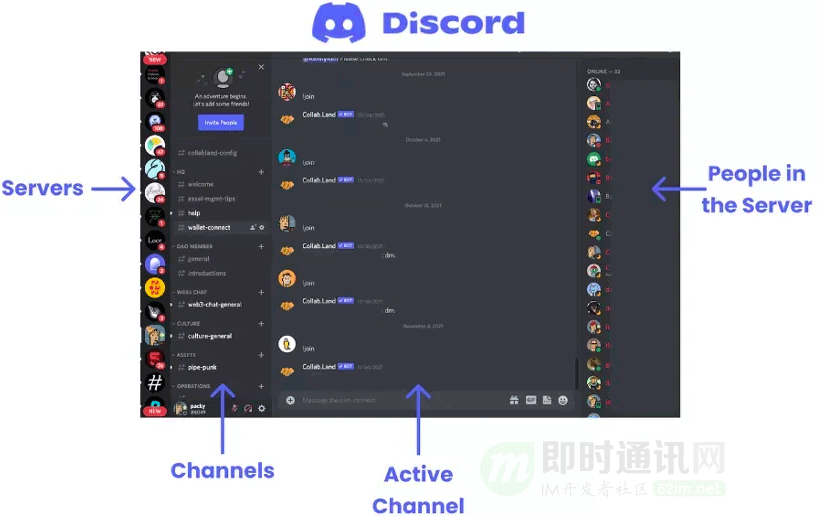
Use a checklist that separates correctness from polish. The first pass verifies sources, dates, facts, calculations, counts, units, platform rules, and the hypothetical label. The editorial pass checks brand voice, repetitive hooks, vague claims, and accidental promotion. The visual pass checks dimensions, crop, safe zones, image words and https://discordnamegenerator.com numbers, hands, faces, objects, symbols, and contrast. Ask another person to state the takeaway. The motion pass checks continuity, captions, pacing, audio levels, and whether subtitles remain readable behind interface controls.
The finished campaign should feel coordinated rather than cloned. A solo creator producing a short series about compact online identities can move quickly by anchoring every format to the same audience decision, evidence note, and labeled example. Keep the source stable while presentation changes. When letter shapes, spoken form, accidental meanings, platform rules, and alternative lengths remain traceable and an illustrative screen that rejects 'I1O0' for visual ambiguity stays explicitly hypothetical, the set can teach a concrete method without implying certainty. Publish only after copy, image, crop, continuity, captions, and silent playback pass the recorded human check.
댓글목록
등록된 댓글이 없습니다.
